Water intrusion and secondary mold growth are among the most destructive, stressful, and financially complex emergencies a property owner can face. Beyond the physical mess of saturated drywall, warped flooring, ruined personal belongings, and lingering odors lies a daunting administrative hurdle: navigating the home insurance claims process. Many homeowners assume that their standard insurance policy automatically covers any form of indoor water damage or mold infestation. Unfortunately, discovering hidden policy exclusions, strict coverage caps, and technical paperwork loopholes after a disaster occurs often leads to delayed claims, partial payouts, or total claim denials.
Successfully managing an insurance claim for water or mold damage requires a balanced approach combining immediate physical response with meticulous documentation and strategic administrative communication. Insurance policies are legally binding contracts with strict duties that homeowners must perform following a property loss. Failing to report damage promptly, failing to mitigate ongoing water flow, or taking improper steps during initial cleanup can jeopardize your financial recovery and leave you paying out of pocket for major repairs.
This guide provides an in-depth, phase-by-phase framework to help you decode policy language, manage emergency mitigation, work effectively with certified trade specialists, navigate complex mold protocols, and negotiate with insurance adjusters to maximize your claim settlement.
Decoding Your Policy Coverage and Identifying Exclusions

The cornerstone of a successful insurance claim is understanding what your policy covers—and what it explicitly excludes—long before water leaks into your home. Insurance companies distinguish heavily between sudden and accidental water damage versus gradual, long-term moisture exposure.
Understanding these key policy distinctions helps set realistic coverage expectations:
- Sudden and Accidental Discharges: Standard homeowners policies typically cover sudden, unexpected events, such as a burst supply line under a sink, a ruptured water heater tank, a frozen pipe failure, or an overflowing washing machine hose.
- Gradual and Continuous Leaks: Claims involving slow leaks that occur over weeks, months, or years—such as a dripping shower pan, rotting subfloor, or slow pinhole copper pipe leak—are routinely denied due to policy exclusions for wear and tear, age, or lack of routine maintenance.
- Sewer and Drain Backups: Standard policies almost universally exclude water entering through municipal sewer lines, backed-up drains, or sump pump failures unless the policyholder added a specific sewer backup endorsement rider.
- Surface Water and Flooding: Rising groundwater, overflowing nearby bodies of water, heavy surface runoff, or coastal storm surges are strictly excluded under standard home policies and require a separate flood insurance policy issued through national flood programs.
- Roof Leak Dynamics: Interior water damage resulting from storm-damaged roofs is typically covered only if wind or hail created a fresh opening in the roof envelope first.
Weather events also present unique coverage nuances. If a storm blows shingles off your roof, allowing rainwater to pour into your attic, the resulting interior damage is generally covered because wind created an opening first. However, if water leaks through an aging, neglected roof without storm damage, coverage may be denied.
To protect against specific commercial or weather risks, some property managers and event organizers invest in a specialized rain insurance policy to protect financial assets against heavy precipitation events, though residential structures rely on standard wind and water riders.
To prevent insurance companies from blaming structural damage on pre-existing conditions or deferred maintenance, schedule a regular home inspection with an independent licensed professional. Having an official evaluation on file creates an objective paper trail proving your roof, plumbing, foundation, and interior surfaces were in sound condition before any sudden loss occurred.
Immediate Mitigation and Emergency Response
Every homeowners’ insurance contract includes an explicit clause known as the duty to mitigate. This clause requires the policyholder to take immediate, reasonable steps to stop water flow, extract standing water, and prevent secondary damage from spreading across unaffected areas. Sitting back and waiting for an insurance adjuster to arrive on site before beginning cleanup can give the insurance company legal grounds to deny portions of your claim due to neglect.
Follow these critical steps immediately after discovering water intrusion:
- Shut Off the Main Water Line: If the water source is internal, immediately turn off the main water shutoff valve to stop the flow and prevent further saturation.
- Document the Initial Scene Thoroughly: Before moving items or extracting water, take extensive, high-resolution photos and videos of standing water levels, saturated walls, damaged personal property, and the specific mechanical point of failure.
- Protect Surviving Property: Move furniture, electronics, rugs, and personal items out of standing water or elevate them on aluminum foil blocks or plastic furniture risers to prevent staining and ongoing moisture absorption.
- Avoid Structural and Electrical Hazards: Stay clear of rooms where drywall ceilings are sagging under heavy water weight, and turn off circuit breakers to affected zones to prevent dangerous electrical shocks.
- Log Temperatures and Humidity: Record ambient indoor conditions if possible to document the environment before emergency drying equipment arrives.
Once the immediate source is contained, contact a licensed local water restoration company to perform professional water extraction and structural drying. Emergency mitigation teams operate on a round-the-clock basis, deploying heavy-duty truck-mounted pumps, weighted extraction tools, and moisture meters to complete water extraction from carpets, pads, structural framing, and hard surfaces.
Hiring certified water damage repair services ensures that structural framing, subfloors, and wall cavities are dried using scientific psychrometric principles. Professional technicians set up industrial low-grain refrigerant dehumidifiers and high-velocity air movers to control relative humidity, keeping structural wood studs from warping, rotting, or developing active mold colonies within twenty-four to forty-eight hours.
Navigating Water Extraction and Structural Restoration Claims
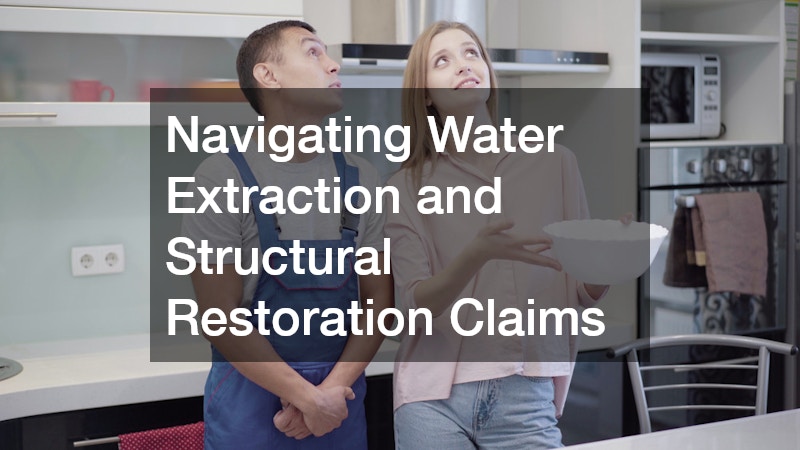
The documentation generated during the first forty-eight hours of a water loss often determines whether an insurance company pays a claim in full or disputes the scope of repairs. Insurance adjusters rely on objective, technical data rather than verbal descriptions to approve line-item restoration estimates and labor costs.
Working with an experienced local water damage services provider guarantees that your property loss is documented using industry-standard protocols. Qualified restoration specialists track moisture migration through walls, cabinetry, and floors using infrared thermal cameras and penetrating moisture probes. They log daily moisture readings in official drying logs, proving to the insurance adjuster that structural materials reached accepted dry-standard goals before build-back repairs began.
Restoration contractors also generate detailed, line-item estimates using specialized pricing software like Xactimate, which uses regional labor and material rates recognized by insurance carriers. This ensures every step—from antimicrobial spraying and baseboard removal to containment barrier setup—is priced accurately for carrier review.
Managing Mold Assessment, Remediation, and Containment
Mold spores exist naturally in indoor and outdoor environments. However, when ambient indoor moisture levels spike due to unaddressed water leaks or high humidity, mold spores germinate on organic materials like drywall paper, wood framing, insulation, and carpet backing within twenty-four to forty-eight hours.
Managing mold claims presents unique administrative challenges because many standard homeowners policies place strict caps on mold coverage—often limiting payouts to $5,000 or $10,000 for total testing, containment, and removal, unless an expanded mold endorsement was purchased prior to the loss.
To protect your health, your indoor air quality, and your legal claim, maintain a strict separation of duties between mold testing and mold cleanup. Hiring the same company to assess mold levels and perform the physical cleanup presents a clear conflict of interest that insurance carriers frequently challenge.
Instead, start by engaging independent mold inspection contractors to conduct air sampling, thermal imaging, surface lift tests, and moisture mapping. Independent assessors produce a detailed, unbiased protocol outlining the exact scope of work required, including containment boundaries, air exchange rates, negative pressure goals, and clearance criteria.
Once the protocol is established, hire certified mold contractors to execute the remediation plan. Professional remediation crews follow strict industry standards, including setting up plastic containment chambers under negative air pressure, running industrial HEPA air scrubbers continuously, removing non-salvageable porous building materials, and hand-scrubbing structural framing with EPA-registered fungicides before final HEPA vacuuming.
Complete Final Clearance Testing and Post-Remediation Approvals
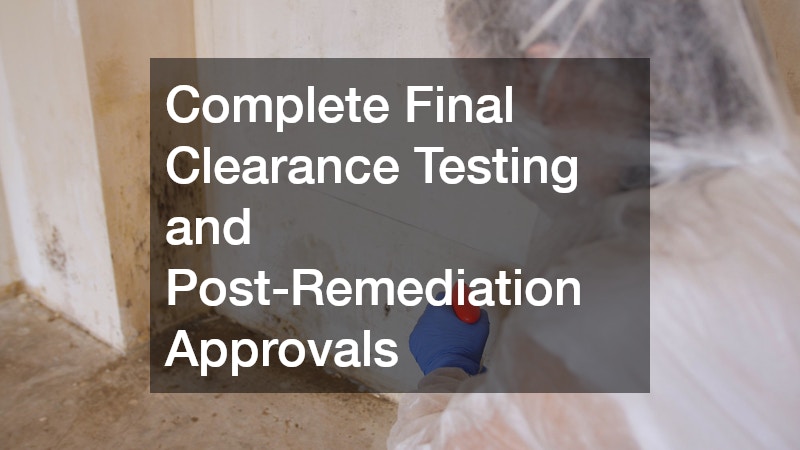
Physical removal of mold-damaged materials is only half the battle. Closing out a mold remediation claim with your insurance company requires verifiable proof that the containment zones were thoroughly sanitized and returned to safe living conditions.
After remediation crews finish cleaning and drying the affected areas, the independent environmental inspector must return to the property to perform post-remediation clearance testing. This phase ensures that containment chambers remain sealed and that remediation efforts meet all industry standards.
The post-remediation clearance process involves several technical steps:
- Visual Inspection: The inspector checks all contained areas for visible dust, debris, water staining, or remaining fungal growth on structural surfaces.
- Air Sampling Inside Containment: Spore trap air samples are collected inside the containment zone while air scrubbers are running to measure indoor spore concentration.
- Outdoor Control Sampling: Baseline air samples are collected outdoors simultaneously to compare indoor fungal ecology against natural ambient air levels.
- Laboratory Analysis: Samples are sent to an accredited third-party microbiological laboratory for fungal identification and spore count quantification.
- Issuance of Clearance Certificate: If indoor spore counts are lower than outdoor control samples and free of indicator mold species, the inspector issues a formal Clearance Certificate.
Obtaining a passing clearance certificate provides essential legal and financial documentation for your claim. Submitting this official report to your insurance carrier proves that the mold remediation work was successful, allowing contractors to dismantle containment zones and begin structural rebuilds without risking claim disputes.
Documenting Personal Property Losses and Contents Claims
Water intrusion and mold growth rarely affect structural walls alone; they frequently destroy personal property, furniture, electronics, clothing, and sentimental items stored within the affected rooms. Managing the contents portion of your insurance claim requires meticulous tracking to ensure you receive full compensation under your policy’s Personal Property coverage.
Many policyholders make the mistake of discarding damaged personal items during initial cleanup without logging them first. Throwing away water-soaked furniture, shoes, or electronics before the insurance adjuster inspects them or before they are properly photographed often leads to those items being excluded from your final settlement payout.
Follow these practical guidelines for managing personal property losses:
- Create an Itemized Contents Inventory: Build a detailed spreadsheet listing every damaged item, including its brand, model number, approximate age, purchase date, and estimated replacement cost.
- Take Individual Photographs: Photograph every damaged item individually, taking close-up shots of brand labels, serial numbers, and visible water stains or mold growth.
- Separate Salvageable from Non-Salvageable Items: Move salvageable textiles to professional restoration dry cleaners who specialize in ozone treatment and water damage restoration.
- Retain Damaged High-Value Items: Store expensive electronics, jewelry, or artwork in a secure, dry zone until the field adjuster evaluates them in person.
- Track Off-Site Storage Expenses: If you must rent a temporary storage unit to protect unaffected furniture during structural repairs, keep all rental receipts for reimbursement under your claim.
Collaborating with a local water restoration company that offers contents inventory and pack-out services ensures that personal items are cleaned, cataloged, and stored according to strict insurance standards, maximizing your personal property claim payout.
Negotiating With Adjusters and Finalizing Claims
Once emergency mitigation is complete, structural drying is verified, and mold containment is cleared, you will interact closely with the insurance company’s field adjuster and claims examiner. Understanding how adjusters evaluate claims empowers you to advocate effectively for a complete, fair settlement that covers all necessary repairs.
Keep these core principles in mind during final negotiations:
- Maintain a Centralized Communication Log: Record every interaction with your insurance company, noting the date, time, phone number, name of the representative, and a detailed summary of what was discussed or promised.
- Keep All Physical Evidence: Do not allow contractor crews to haul away damaged plumbing components, burst pipes, or appliance hoses until the insurance adjuster has inspected them in person to verify the physical point of failure.
- Understand ACV vs. RCV Payouts: Know whether your policy pays Actual Cash Value (depreciated value based on age) or Replacement Cost Value (the full current cost to replace items new). If you have RCV coverage, you will receive an initial ACV check, with the remaining withheld depreciation paid out after you submit final contractor repair receipts.
- Track Additional Living Expenses (ALE): If water or mold damage renders your home uninhabitable, track all hotel bills, restaurant receipts, utility differences, and temporary housing costs to submit under your policy’s Loss of Use coverage.
- Coordinate Joint Site Inspections: Arrange for your primary water restoration, mold remediation, and waterproofing services to meet directly on site with the field adjuster during their initial walk-through.
Having your technical trade partners present during the adjuster’s walk-through ensures that hidden structural drying costs, equipment days, subfloor moisture levels, and structural demolition scope are explained and defended clearly using industry data.
Simultaneously, ensure your mold remediation specialists provide their clearance certificates and itemized containment invoices directly to the carrier examiner. Aligning all certified trade estimates with the adjuster’s initial scope report prevents administrative delays, ensuring that funds for build-back and final repairs are released promptly.
Conclusion
Partnering with certified, independent specialists for water extraction, structural drying, home inspections, mold testing, and physical remediation ensures that your home is restored to safe, healthy standards using industry-accepted practices. Approach the claims process with speed, organization, professional support, and clear communication, transforming a stressful property emergency into a smooth, fully funded path to complete home recovery.